Author: Phillip

  • A day out in Burgundy

    A day out in Burgundy

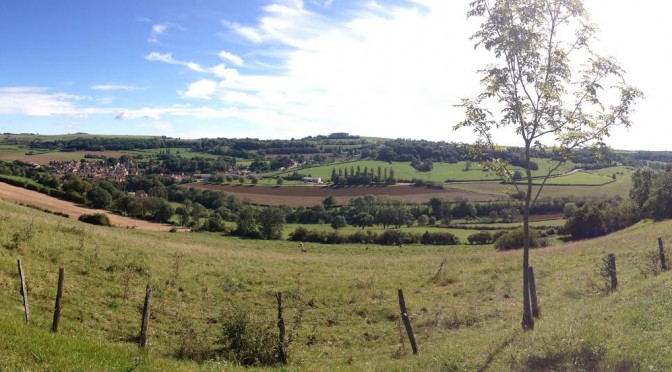
    We decide to drive out for the day and explore near by places and purposely choose to not visit the Burgundy vineyards.
    Instead we head in the opposite direction past Sombernon and by chance there is a grand final of the Border Collie Sheep dog competition.

    SAM_3065
    SAM_3069
    SAM_3059
    (more…)
  • 800 years ago : the battle of Bouvines

    Throughout its history, France has participated in many wars. In Europe, France is one of the countries that has had the most successful military history. Great victories and shameful defeats have shaped the country and contributed to its evolution to form the nation that France is today. In the Nord-Pas-de-Calais region, a victory would forever mark the name of a small village in history books and change the face of the Kingdom of France during the Middle-Ages.

    (more…)

  • Le Bazar de la Charité

    The 4th of May 1897, in the 8th arrondissement of Paris, an alarming smell of horror and smoke invaded Street Jean-Goujon. Quickly, a general panic spread in the street and its surroundings. The Bazar de la Charité where the annual charity event organized by the Catholic high society and aristocracy is on fire.

    (more…)

  • First World War : the Marne

    A hundred years ago from the 5th September to the 12th September 1914, the first battle of the Marne happened between Germany and Franco-British troops.

    (more…)

  • First World War : 29th of August 1914

    On the 29th of August,  the allied powers are unable to stop the German advance on the western front. Some parts of France are already under complete German occupation. Paris, a German target,  felt threatened by this advance and the French government made the decision to leave Paris and settle in the city of Bordeaux, in the South.

    (more…)

  • First World War : 26th of August 1914

    On the 26th of August, the allied troops are retreating in front of the German advance.

    (more…)

  • First World War: 25th August 1914

    After the disastrous battles of Morhange, Sarrebourg and the retreats in this last half of the first month of the war, the II French Army is asked to defensively deployed in what is called the ” Trouée de Charmes “, a large territory in the Meurthe-et-Moselle, not far from the city of Nancy. The Trouée is a large territory empty of any fortifications.

    (more…)

  • First World War : 22nd of August 1914 the bloodiest day

    A hundred years ago, France knew the bloodiest day of its history. Never before or after this day has France lost so many soldiers.

    (more…)

  • First World War : 19th of August 1914

    While Brussels has fallen to German soldiers, in France, the soldiers of the Empire and the Republic were once more fighting in the city of Mulhouse. The nearby town of Dornach became the theater of heavy combats the 19th of August. Supported by artillery and helped by a regiment of sappers, France finally win the fight in Mulhouse. Hundreds of casualties are reported both sides and around a thousand German soldiers are made prisoners.

    Generally, the French forces are pushing on in Lorraine. But several divisions are falling back behind the Meuse river. The 19th and 20th of August, the battle of Sarrebourg. On the 19th, the first fights between French and Germans around Sarrebourg are unsuccessful and even create a dangerous situation for the French divisions, which could easily be flanked.  On the 20th, the offensive is a failure, many soldiers are pushed back by the Germans. However, the retreat of soldiers in the mountainous zone of the Vosges became an advantage as these troops were able to contain any German attempts to break them.


    Further North, the second French army is attacking the town of Morhange and its surroundings against the forces of the Crown Prince of Germany. Starting on the 19th, this offensive will prove to be  a serious defeat on the 20th. For many officers and even soldiers, the German army has not defeated the French army but just repelled the offensives of Lorraine. The armies retreated around Nancy, one of the Germans main objective.

  • First World War : 17th and 18th of August 1914

    On the 17th of August 1914, the French offensive continues. However many attacks are launched without an enemy in front. The German forces have slightly retreated  and when French troops entered the city of Sarrebourg ( Lorraine region ) the 18th, it had been abandoned. The population of the city applauded the French troops. A sentiment of joy spread in the air, but many townsfolk warned the soldiers. This pretended German retreat is a trap, there are not far from the city in great number, more numerous than the French and better equipped in artillery. And they were right. In the afternoon of the 18th of August, patrols encountered heavy defended German positions. Soon, the entire valley of the Sarre could hear artillery fire. The battle of Sarrebourg has began.

    In Belgium, the perspectives were bad. Liège had fallen the day before and Germany was moving very fast toward the capital city, Brussels. The 18th, King Albert ordered the Belgian army to withdraw to the fortifications near Anvers.

    In the vast majority of the Western front, the German army is free to advance. The allied nations, despite brave resistance, are unable to stop them.


  • First World War: 16th of August 1914k

    The 16th of August 1914 is an important day in the beginning of the First World War. The totality of the BEF, the British Expeditionary Force, has completed its landing in France.

    But hundreds of kilometers away from French soil, in the Adriatic sea, an event will mark the start of naval warfare in the First World War. (more…)

  • First World War: 14th of August 1914

    On the 14th of August 1914, the army of Alsace launched a massive attack on German positions. The 1st and 2nd French armies attacked on the directions of Morhange and Sarrebourg where in a couple of days, massive engagements between France and Germany would occur with almost 900,000 soldiers engaged.

    The 14th of August is mostly spent in moving troops, with skirmishes here and there. The German forces were highly outnumbered compared to the French soldiers and several villages were abandoned at the sight of the red pants advance. The cities and towns that fell last week are taken back, Mulhouse and Thann are once again under French control.

    At the same time, French planes are bombing a zeppelin hanger in the city of Metz. The second French offensive in the east was on its way.

  • First World War: 13th of August 1914

    The army of Alsace, formed in the aftermath of the defeat at Mulhouse, finally received its commander, General Paul Pau, mutilated veteran of the Franco-Prussian war. The same day, the 13th of August, the army of Alsace launched an attack on the village of Montreux-Vieux and its surroundings. Montreux-Vieux became the first Alsacian village to be taken by the French army.

    (more…)

  • First World War : 11th of August 1914

    Following the defeat near Mulhouse and the force retreat the French high commandment created an ” Army of Alsace ” with at its head, General Paul Pau. He will join his army on the 13th of August.

    The same day, France declares war to Austria-Hungary, answering to their declaration of the 10th and cuts all diplomatic relations with the Empire.

    While the hope of a quick victory in Alsace and Lorraine is gone,  the French army offered the Germans a heavy resistance in the Meuse ( Lorraine region ). The small village of Pillon is taken but the German army is confronted by hundreds of French poilus in the neighboring village of Mangiennes. The two villages are only separated by woods.

    Parts of the III and IV French armies are stationed in Mangiennes, alerted at the presence of German hussars nearby. After the French cavalry sighted the German forces, Colonel de Hautecloque ( in charge of France’s 14th hussars regiment ) ordered machine guns to be deployed. The two enemy armies are barely a couple of kilometers away from each other. Artillery fire is exchanged and for a while, both sides camped on their positions. On the German general is asked to take Mangiennes, despite indicated that the terrain was not favorable for an assault. However the German command, realizing that their flank was weak and a easy target decided to reinforce the presence of German soldiers in Pillon. The French officers are persuaded that the artillery destroyed the German machine guns or forced them to retreat and General Cordonnier charged their flanks, however it was unsuccessful and the cost in men hight. Some soldiers, despite the orders, pursued the Germans in the nearby village of Loison.

    The fighting of the 11th of August between Mangiennes and Pillon made 120 Frenchmen died and 240 Germans lost their lives.

  • First World War : 9th of August and the battle of the frontiers.

    On the 9th August, at Mulhouse and its surroundings, yesterday’s victory felt short for the soldiers. The officers knew that a great amount of German forces were very close but disagreement in the leading ranks lead to the soldiers keeping their positions. The French artillery unsuccessfully fired at a German train during the entire morning. A train that was transporting more and more enemies to the nearby forest. At the end of the afternoon, an attack launched by a corps ( the VII ) plus another division, forced the French troops to retreat after resisting several hours. The retreat was success, despite being the target of German artillery.

    The French regiments organized themselves only several kilometers from Mulhouse, who was only defended by General Bonneau and his men who would retreat on the morrow, the 10th of August. The German victory at Mulhouse cost 3,000 men and France suffered 4,000 casualties. With the retreat of Bonneau, the French commandment began to send troops to the Vosges. Bonneau lost his position because of his “ lack of aggressiveness “ and hence was replaced. The retreating troops headed to Belfort, a fortified place.

    The battle of Mulhouse is part of the bigger Battle of the Frontiers, fought by France, Belgium and the United Kingdom against the German Empire, a battle that will last until the 23rd of August.

    At the same time, Belgium was loosing its incredible system of fortifications and fortresses. The German machine was advancing and was unstoppable.

    The same day, in Africa, a joint operation between France and the United Kingdom launched an invasion of Togoland,  a German colony.
  • First World War: 8th of August

    After the successful operations of the 7th of August, the French Ie Army continued its offensive in Alsace and quickly captured Mulhouse on the 8th of August. The industrial city was easily taken and Paris celebrated General Bonneau‘s victory. The French forces were then able to establish their front-line between Thann and Mulhouse.

    However, if not a single German soldier could be sighted in the city, they did not left their positions without gathering a lot of intelligence of the French Ie Army. In the evening of the same day, General Curé received word that a massive German force was in movement in the nearby cities and forests. The General understood that the French soldiers were inferior in numbers, the city had to be evacuated, less than 24 hours after being taken. A strategic retreat in the surroundings was organized, ready to face the German forces on the 9th.


  • First World War : 7th of August 1914

    While the fighting was raging in Belgium, the German army was not planning to lunch an offensive against France on the Alsace borders. Since the beginning of the war, a plan made by French head quarters was about to be executed. 19,000 men were gathered under the command of General Louis Bonneau, an Alsatian with 46 years of military service behind him. (more…)

  • First World War : 6th of August 1914

    More and more soldiers were converging North, ready to meet the enemy at the borders. If during war times news are often grim, the press spread quickly the word of Belgian resistance, one which the German army was not expecting.  Germany’s plans even had to be changed, to the point of crossing  Netherlands borders. Almost every newspapers praised Belgian heroism in their streets, sometimes with very doubtful sources concerning the numbers of killed etc… (more…)

  • First World War : 5th of August 1914

    On the 5th of August 1914, while the Belgian troops had started to battle German forces near Liège, French forces were moving towards Belgium. Some regiments had already arrived. At the same time, the mobilized men were still being moved in their respective regiments and reinforcing the protection at the borders.

    (more…)

  • First World War : 4th August 1914

    On August the 4th 1914, while Germany crossed the Belgian borders at 8:02 am, the United Kingdom and its British Empire declared war on Germany. India, Canada, Australia, New Zealand, as dominions of the Empire, all entered the war with dozens of other colonies. At the same time, the United States announced their neutrality in the conflict. On August the 4th, the Tiple Entente countries had now fulfilled their obligations to help each other in times of war, with France, Russia and the United Kingdom joined in a war against the Triple Alliance of Germany, Austria Hungary, Italy and the Ottoman Empire.

    The cities of Bône, today known as Annaba and Philippeville ( today Skikda ) in North East Algeria , both important harbours in the region, came under fire on August 4th around 6:00am by SMS Breslau, a cruiser and SMS Goeben, a battle-cruiser. According to their imperial orders, these two German ships were left the choice of either harassing the Mediterranean sea or sailing back to German waters. The commander, having recently learned the declaration of war between France and Germany decided to bombard Algerian ports in order to prevent or least slow the transport of French troops by the Mediterranean sea. SMS Goeben and SMS Breslau both did little damage and after several minutes, decided to leave.